

| Specification | Details |
|---|---|
| Product Name | Square Petri Dish for Laboratory |
| Product Type | Petri Dish |
| Shape | Square |
| Intended Use | Laboratory |
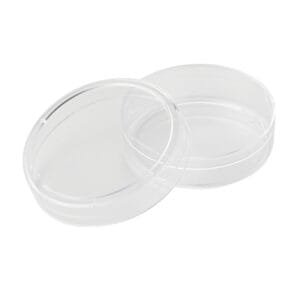
Siny Medical supplies the Square Petri Dish for Laboratory for research institutions, microbiology laboratories, biotechnology companies, educational facilities, and international laboratory consumables distributors. Its square shape provides an alternative to conventional round culture dishes for laboratory procedures that benefit from a defined, straight-edged working area.
A square Petri dish is a laboratory vessel used in suitable sample preparation, culture, observation, and analytical workflows. Petri dishes are commonly associated with microbiological research, where prepared culture media provide a surface for growing and examining microorganisms. However, the suitability of an individual dish depends on its material, dimensions, sterility, and intended use.
Square dishes can be particularly useful when a procedure involves arranging samples in rows, organizing multiple inoculation areas, or working with a rectangular layout. The straight edges can provide convenient visual reference points during sample positioning and documentation.
Nevertheless, shape alone does not establish a particular working area, lid design, optical performance, or compatibility with laboratory equipment. Researchers should evaluate these characteristics according to their experimental requirements.
At Siny Medical, we supply laboratory consumables for research organizations and international distributors. Our product range supports laboratories seeking practical cultureware for routine procedures, research projects, and institutional procurement.
The square geometry is the defining characteristic of this product.
Compared with a conventional round dish, a square vessel has straight sides and corners. This arrangement can be useful when laboratory personnel need a structured working area for sample placement or observation.
For example, researchers may use an appropriate square dish to organize inoculation regions according to an experimental plan.
However, the actual usable area depends on the dish’s internal dimensions and design.
Therefore, buyers should confirm the required geometry before selecting a product.
Laboratory experiments often involve several samples, treatment groups, or observation points.
A square dish can provide a convenient layout for procedures that use rows, columns, or designated sample regions.
Researchers may also use a prepared sample map to document the location of individual experimental conditions.
This approach helps maintain clear records and supports consistent sample handling.
Nevertheless, the dish itself should not be assumed to include molded compartments or printed grids unless these features are confirmed.
Petri dishes are widely used with appropriate solid or semi-solid culture media.
For example, agar-based media are common in microbiology laboratories.
Researchers may use suitable dishes to prepare culture surfaces for observation, isolation, or other experimental procedures.
However, the choice of culture medium depends on the organism and intended test.
Furthermore, not every square dish is suitable for every medium preparation or incubation process.
Laboratories should confirm material and temperature compatibility when necessary.
Petri dishes are commonly used in procedures that involve visual examination.
Researchers may observe colony appearance, distribution, or changes over time.
A square working area can provide reference edges for organizing observations and recording sample positions.
However, the suitability of a particular dish for optical inspection depends on material transparency, surface quality, and geometry.
These characteristics should be verified when imaging or microscopy is required.
Dish geometry can influence how laboratory personnel handle and arrange culture vessels.
Square dishes may be convenient for certain bench layouts, storage arrangements, or sample-positioning procedures.
However, stacking stability, lid retention, and storage efficiency depend on the actual design.
A square shape alone does not establish that the dish is stackable, leakproof, or suitable for transportation.
Petri dishes are used in microbiology, biotechnology, education, and other laboratory disciplines.
A square format may be selected when its geometry matches the intended procedure.
However, different research activities have different requirements for sterility, materials, culture surfaces, and dimensions.
Therefore, laboratories should evaluate the product according to their specific workflow rather than relying on shape alone.
Microbiology laboratories commonly use Petri dishes for cultivating and observing microorganisms on suitable media.
Researchers may prepare agar surfaces and use appropriate inoculation methods to investigate microbial growth.
A square dish can be relevant when the experiment benefits from a straight-edged working area.
However, successful cultivation depends on suitable media, incubation conditions, and laboratory procedures.
The selected dish must also meet the relevant material and sterility requirements.
Microbial isolation procedures aim to obtain distinguishable colonies or populations for further study.
Researchers commonly use appropriate culture dishes and established inoculation techniques.
A square format may provide a useful layout for recording sample positions.
Nevertheless, the geometry does not independently determine isolation performance.
The results depend on the organism, medium, inoculation method, and incubation conditions.
Some laboratory procedures require samples to be placed in a structured arrangement.
For example, researchers may organize experimental regions in rows or use defined reference positions.
A square vessel can support these layout-based workflows when its dimensions are appropriate.
However, the presence of a square outline does not establish internal divisions or printed coordinate markings.
Laboratories should verify those features if their protocol requires them.
Researchers often examine colony characteristics during microbiological studies.
These observations may include colony shape, color, size, distribution, and other visible features.
A suitable culture dish provides a surface for these procedures.
The straight edges of a square dish may help researchers orient images or organize observation records.
However, quantitative colony analysis also depends on the experimental method and measurement equipment.
Biotechnology laboratories use culture dishes for selected biological experiments and sample preparation procedures.
Some projects involve microorganisms, while others use different biological materials.
The appropriate vessel depends on the research objective.
Therefore, buyers should verify whether the selected dish is suitable for the intended sample and analytical procedure.
Universities and teaching laboratories frequently use Petri dishes to demonstrate basic microbiology concepts.
Students may learn about culture media, colony morphology, sample identification, and laboratory documentation.
A square format can provide a clear visual layout for suitable demonstrations.
However, educational experiments must follow institutional biosafety requirements and appropriate supervision.
Research laboratories sometimes evaluate new procedures or compare established methods.
These activities may involve changes to sample placement, media preparation, or observation arrangements.
A square dish may be useful when the method benefits from a rectangular working area.
However, laboratories should verify vessel compatibility before introducing a different dish geometry into a validated procedure.
Petri dishes are available in different shapes, including round and square designs.
Both can serve as laboratory culture vessels when their properties match the intended procedure.
However, their geometry can influence working-area layout, sample organization, and compatibility with equipment.
Therefore, shape is one of several important selection factors.
| Feature | Square Petri Dish | Round Petri Dish |
|---|---|---|
| Shape | Straight sides and corners | Circular outline |
| Working-Area Layout | Rectangular or grid-based planning may be convenient | Radial or circular layout |
| Sample Positioning | Straight edges provide reference directions | Positioning often uses circular orientation |
| Common Consideration | Side length and usable internal area | Diameter and usable internal area |
| Equipment Compatibility | Depends on dish dimensions and design | Depends on dish dimensions and design |
| Main Selection Factor | Workflow requiring square geometry | Workflow suited to circular geometry |
These comparisons describe general geometric differences rather than confirmed performance characteristics of this product.
A square dish and a round dish may provide different usable areas even when their external dimensions appear similar.
For a simple geometric comparison, the area of a square is calculated as side length multiplied by side length.
The area of a circle is calculated as pi multiplied by the radius squared.
However, actual culture area is influenced by internal dimensions, rounded corners, wall geometry, and other design features.
Therefore, buyers should use verified internal measurements when comparing dishes.
Some laboratory dishes incorporate printed or molded grids.
These markings may help users organize samples or record positions during observation.
However, other square dishes have no internal markings.
The square shape alone does not establish the presence of a grid.
If a laboratory protocol requires numbered positions or a specific grid arrangement, buyers should confirm the relevant design.
Petri dishes may be available with one continuous working area or multiple compartments.
Divided dishes can support selected procedures requiring physical separation between regions.
However, a conventional square outline does not mean that a dish contains internal partitions.
Researchers should select the required compartment arrangement according to their experimental method.
There are both used in laboratory cultureware.
Plastic dishes are often lightweight and convenient for routine handling. Glass dishes may be selected for procedures that require particular material properties or validated reuse practices.
However, chemical resistance, heat tolerance, optical characteristics, and sterilization compatibility vary by material.
The material of this specific square dish is not established by its title.
Therefore, buyers should confirm the actual material before purchasing.
Many microbiology procedures require sterile culture vessels.
However, Petri dishes are available in both sterile and non-sterile configurations.
A square shape does not establish sterility.
Buyers should verify sterile status, packaging integrity, and relevant documentation when required.
In addition, aseptic handling remains essential during laboratory culture procedures.
Begin by defining the laboratory procedure.
For example, microbial culture, sample observation, method development, and educational experiments may have different requirements.
The selected dish should match the intended use.
Square dishes are generally evaluated using their side dimensions and internal working area.
However, external dimensions do not always equal usable culture dimensions.
Buyers should verify the actual measurements when their procedure requires a particular working area.
Material selection influences how a dish performs under different laboratory conditions.
For example, certain procedures may involve temperature changes, chemical exposure, or optical observation.
Plastic and glass have different properties.
Therefore, laboratories should confirm the selected material before use.
Many culture procedures require sterile consumables.
However, sterile status must be confirmed for the selected product.
Buyers should review relevant product documentation and packaging requirements when necessary.
Petri dish lids influence handling and protection of the culture surface.
Different designs may vary in fit, ventilation characteristics, and condensation management.
However, the presence and characteristics of a lid cannot be established from the product title alone.
Buyers should confirm the required configuration.
Some laboratories need internal grids or divided culture areas.
These features can help organize samples or separate experimental regions.
However, they are not inherent to every square dish.
Therefore, buyers should verify the actual design.
Petri dishes are commonly used with appropriate culture media.
However, media preparation conditions can affect vessel selection.
For example, laboratories should consider whether the dish material is suitable for the temperature of the medium when poured.
The selected dish should also support the intended incubation conditions.
Some experiments involve direct visual inspection, photography, or microscopy.
These procedures may require particular optical properties.
However, transparency and imaging compatibility depend on the material and surface characteristics.
Buyers should confirm these requirements before ordering.
Laboratories may use incubators, automated imaging systems, storage racks, or other equipment.
Compatibility depends on the actual dish dimensions and geometry.
A square shape alone does not establish compatibility with a particular instrument.
Therefore, buyers should verify equipment requirements.
Microbiology laboratories may follow recognized procedures for culture media and laboratory quality.
For example, ISO 11133 addresses the preparation, production, storage, and performance testing of culture media used in microbiological examinations.
This standard can provide useful context for laboratories working with culture media.
However, it does not automatically establish conformity or certification of a particular Petri dish.
Buyers should distinguish between standards relevant to their procedures and verified product-specific documentation.
Research institutions, biotechnology companies, and distributors often purchase laboratory consumables in regular quantities.
Purchasing teams should consider expected consumption, storage conditions, packaging requirements, and supply schedules.
For international buyers, clear product identification and confirmed specifications are important.
Siny Medical supplies laboratory consumables for institutional procurement and international distribution.
A square Petri dish is a laboratory culture vessel with a square outline. Its geometry provides straight edges that may be useful for sample arrangement and observation.
They are used in suitable laboratory procedures involving culture media, sample preparation, microbiological observation, and research activities.
The main difference is their geometry. Square dishes have straight sides and corners, while round dishes have circular outlines. The preferred format depends on the laboratory procedure.
They can be suitable for microbiology when their material, sterility, dimensions, and design meet the requirements of the intended procedure.
No. Some square dishes include grid markings, while others have a continuous unmarked working area.
Sterility depends on the specific product. Buyers should verify sterile status and packaging requirements before using dishes for procedures that require sterile cultureware.
Both plastic and glass are used in laboratory cultureware. The material of a particular square dish should be confirmed before purchase.
Siny Medical supplies laboratory consumables for research institutions, biotechnology companies, purchasing organizations, and international distributors. Customers can discuss bulk purchasing requirements according to their laboratory applications.
Siny Medical supplies the Square Petri Dish for Laboratory for research organizations, biotechnology laboratories, educational facilities, and international distributors. Its square geometry provides a practical alternative to round culture dishes for suitable laboratory workflows. Contact Siny Medical to discuss your required dish dimensions, material preferences, laboratory applications, bulk purchasing needs, and quotation details.
Copyright © 2026 | Ningbo Siny Medical Technology Co., Ltd