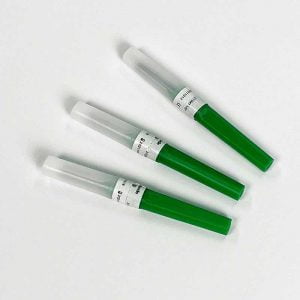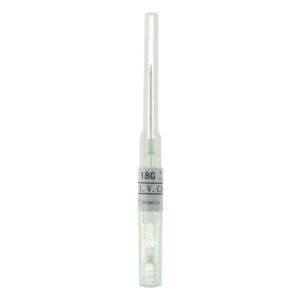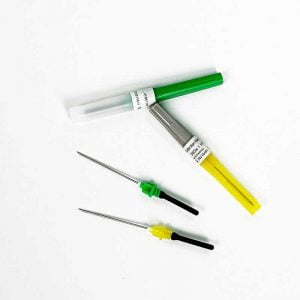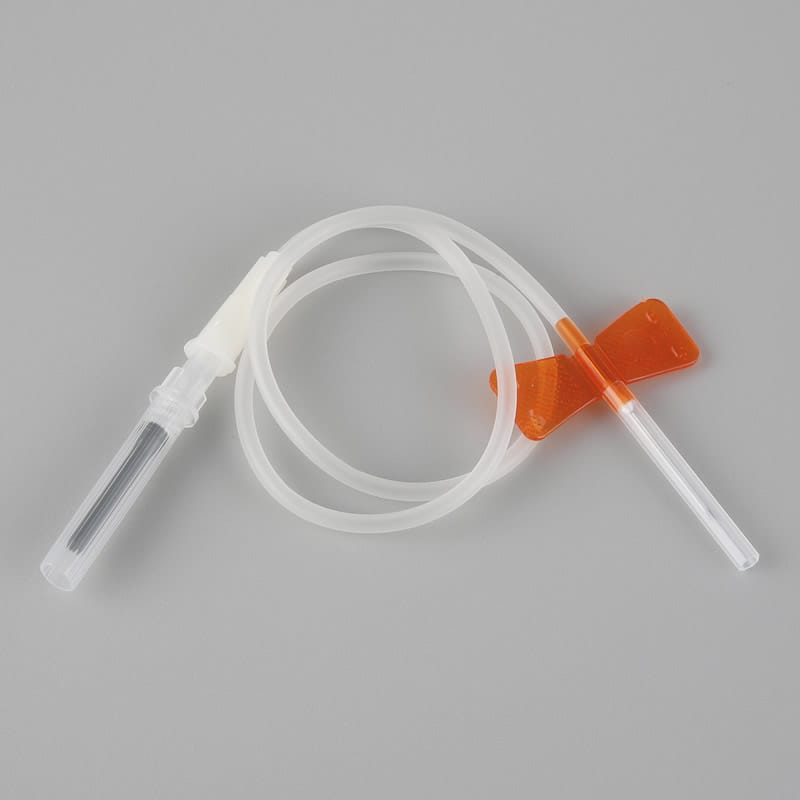

| Product Name | Butterfly Needle |
| Method | PP, Rubber, Stainless Steel Needle, and silicone oil. |
| OEM/ODM | Yes |
| Certificate | CE, ISO13485, ISO9001 |
| Usage | EO sterilization |
| Sterile | Urine |
| Sample | Free |
| Service | The groups we serve: distributors, import traders, government procurement, Buying Agents, and medical chain stores, we provide one-stop procurement for you to simplify your procurement process |
Siny Medical supplies Safety Winged Infusion Sets for hospitals, clinics, healthcare procurement organizations, and medical consumables distributors. These devices combine a winged needle configuration with a safety-oriented design intended to help reduce accidental sharps exposure during appropriate clinical procedures.
Winged infusion devices are commonly used for selected short-term peripheral venous access procedures. Their winged configuration provides a convenient gripping area during needle placement. In addition, safety-engineered designs incorporate protective features that support occupational sharps safety when used correctly.
However, not all winged infusion devices have the same construction. Needle dimensions, tubing arrangements, connectors, and safety activation methods can vary between models. Therefore, healthcare buyers should verify the selected device’s intended use and technical specifications before purchasing.
For institutional procurement, clinical compatibility is just as important as needle safety. Hospitals must consider the planned procedure, patient requirements, staff training, and existing infusion equipment. Meanwhile, distributors need clear product identification and suitable documentation for their destination markets.
At Siny Medical, we supply medical consumables for healthcare organizations and international distributors. Our focus is on supporting informed product selection and dependable procurement planning.
The winged needle configuration is a defining feature of this product category.
Conventional winged infusion sets use flexible wings positioned near the needle hub. These provide a gripping area that can assist healthcare professionals during insertion and positioning.
The wings may also support controlled handling during suitable venous access procedures. However, performance depends on the complete device design and the user’s technique.
Wing materials, dimensions, and flexibility vary between manufacturers. Therefore, these characteristics should be confirmed for the selected product.
Safety-engineered winged needles incorporate features intended to reduce accidental contact with exposed sharps.
Depending on the design, a protective component may cover or isolate the needle during a specified stage of use.
Some industry models use sliding shields, while others incorporate retractable or alternative protection mechanisms. However, these designs are not interchangeable.
The exact safety mechanism of this Siny Medical product has not been confirmed. Consequently, buyers should review the device instructions and activation requirements before introducing it into clinical practice.
Needle dimensions influence device selection for peripheral venous access.
Gauge describes the external diameter category. In the conventional gauge system, a higher gauge number generally indicates a smaller diameter.
Needle length also affects handling and access. However, the appropriate dimensions depend on patient characteristics, clinical requirements, and the intended procedure.
For this reason, procurement teams should establish the required needle specifications with clinical users.
Many winged infusion devices include flexible tubing between the needle assembly and the connection point.
Tubing characteristics can influence handling, priming volume, and fluid delivery. For example, tubing length and internal diameter may affect the fluid volume required to fill the system.
However, these properties differ between products.
The title of this Siny Medical product does not confirm a particular tubing material, length, or internal volume. Buyers should therefore verify the fluid path configuration before ordering.
Winged infusion sets may be designed for connection to compatible syringes or other medical equipment.
Luer-type connectors are common in many medical fluid administration systems. Nevertheless, the presence of a winged needle does not confirm a specific connector design.
Compatibility should be evaluated according to the intended clinical application.
In addition, buyers should consider whether the selected connection meets the requirements of their existing equipment and applicable procedures.
Peripheral venous access requires appropriate infection-prevention practices.
Many winged infusion sets are supplied sterile and intended for single use. However, the sterile status, sterilization method, and reuse designation of this product have not been verified.
Healthcare facilities should review product labeling and instructions before use.
Furthermore, safety-engineered features do not replace aseptic technique, appropriate handling, or safe sharps disposal.
Winged infusion sets are commonly associated with selected short-term venous access procedures.
Their winged design provides a handling format familiar to many healthcare professionals. However, suitability depends on the patient’s vascular access needs and the device’s intended use.
For example, a procedure requiring brief access may involve different equipment considerations from treatment requiring an indwelling catheter.
Therefore, device selection should follow established clinical guidance.
Certain winged infusion sets may be used for intravenous medication administration when specifically indicated.
In these applications, the device must be compatible with the prescribed medication, administration method, and clinical protocol.
Fluid path characteristics and connection compatibility are important considerations.
However, not every winged needle set is appropriate for every medication or infusion procedure. Healthcare professionals should follow the selected device’s instructions.
Outpatient facilities may use winged needle devices for suitable short-duration procedures.
These settings often require practical equipment that fits established clinical workflows. In addition, sharps safety is important when staff perform repeated needle-based procedures.
Safety-engineered designs may support institutional injury-prevention programs.
Nevertheless, appropriate training, handling, and disposal remain essential.
Hospitals use different vascular access devices according to treatment requirements and patient conditions.
Winged infusion sets may be considered for selected short-term applications. However, they are not automatically interchangeable with peripheral intravenous catheters.
For example, treatment requiring ongoing peripheral access may call for a flexible catheter rather than a metal needle remaining in place.
Clinical departments should therefore determine the intended procedure before selecting equipment.
Some winged needle systems are intended for blood sampling, while others are designed primarily for infusion applications.
Although their appearance may be similar, their intended uses and connection arrangements can differ.
Therefore, a winged infusion set should not automatically be substituted for a dedicated blood collection set.
Blood sampling suitability must be supported by the selected device’s instructions and compatibility with the collection system.
Medical distributors supply winged infusion products to hospitals, clinics, and other healthcare organizations.
Different customers may require different needle configurations, connection systems, and regulatory documentation.
For example, a hospital may prioritize compatibility with existing equipment, while an international distributor must also consider destination-market labeling requirements.
Clear purchasing specifications help reduce ordering errors and support consistent supply.
Safety-engineered and conventional winged infusion sets share a similar general needle configuration. However, their sharps protection features differ.
| Feature | Safety Winged Infusion Set | Conventional Winged Infusion Set |
|---|---|---|
| Winged Design | Yes | Yes |
| Primary Use | Suitable venous access procedures | Suitable venous access procedures |
| Sharps Protection | Includes a safety-oriented feature | Basic designs may lack integrated protection |
| Activation | Depends on the device mechanism | No integrated safety activation in basic models |
| Staff Training | Includes specific safety feature operation | Standard needle handling and disposal |
| Procurement Focus | Safety, usability, compatibility | Needle configuration and compatibility |
These comparisons describe general device categories. Actual characteristics depend on the selected model.
Winged infusion sets and peripheral IV catheters serve different clinical needs.
A conventional winged infusion set generally uses a metal needle during its intended procedure. In contrast, a peripheral IV catheter typically uses an introducer needle to place a flexible catheter into the vein.
After catheter placement, the introducer needle is removed.
| Feature | Winged Infusion Set | Peripheral IV Catheter |
|---|---|---|
| Access Component | Typically a metal needle | Flexible catheter |
| Common Application | Selected short-term procedures | Suitable ongoing peripheral access |
| Needle During Use | May remain during the procedure | Introducer removed after placement |
| Main Selection Factor | Procedure and intended use | Therapy requirements and duration |
| Safety Consideration | Needle protection | Introducer protection and catheter care |
Neither device is universally preferable. The appropriate choice depends on the clinical procedure, treatment duration, and patient requirements.
Winged infusion sets and butterfly blood collection sets may look similar because both use winged needle configurations.
However, their intended applications are not necessarily identical.
A butterfly blood collection set is designed for compatible specimen collection procedures. Meanwhile, a winged infusion set is associated with suitable venous access or fluid administration applications.
Some devices may have more than one indicated use. Nevertheless, this must be established by the product’s labeling and instructions.
For purchasing teams, the key requirement is to verify intended use rather than rely on appearance alone.
Winged needle devices are available in different gauges across the medical device industry.
The following examples illustrate general diameter relationships rather than confirmed specifications for this product.
| Gauge | Relative Needle Diameter | General Selection Consideration |
|---|---|---|
| 21G | Larger than 23G and 25G | Suitable procedures requiring an appropriate larger bore |
| 23G | Smaller than 21G | Selected peripheral venous access applications |
| 25G | Smaller than 23G | Procedures requiring a finer needle when clinically appropriate |
Needle selection should consider more than diameter. Flow requirements, vein characteristics, procedure duration, and device instructions also matter.
A finer needle is not automatically the better option.
Safety-engineered winged needle devices may use different protection systems.
Some incorporate sliding shields that move over the needle after use. Others use retractable mechanisms or protective components designed to isolate the sharp tip.
However, these systems differ in activation steps and handling requirements.
Therefore, healthcare facilities should assess the actual mechanism, staff training needs, and clinical workflow before introducing a new device.
The specific mechanism of this Siny Medical product remains unconfirmed.
Technical standards can provide useful guidance during medical device evaluation.
For example, ISO 23908 addresses sharps injury protection features in relevant medical devices. ISO 80369-7 addresses certain small-bore connectors for intravascular or hypodermic applications.
However, these standards do not automatically apply to every product configuration.
Furthermore, mentioning a standard does not establish product conformity, certification, or test results.
Buyers should verify the applicable requirements and supporting documentation for their selected device.
Begin by identifying the procedures for which the device will be used.
Short-term venous access, medication administration, and blood collection can involve different equipment requirements.
Therefore, buyers should confirm that the selected device is indicated for the intended application.
This helps prevent inappropriate substitution between visually similar products.
The protection mechanism is an important selection factor.
Healthcare facilities should determine how the feature operates, when it is activated, and whether it fits the existing workflow.
For example, some designs require deliberate activation after needle withdrawal.
However, the correct procedure depends on the specific device.
Clinical users should evaluate the selected mechanism using verified instructions.
Needle gauge and length should match the intended procedure and patient population.
Different clinical applications may require different dimensions.
Therefore, procurement teams should consult healthcare professionals before establishing purchasing specifications.
The available needle sizes must then be verified against the selected product.
Where tubing is included, buyers should evaluate its material, length, internal volume, and handling characteristics.
Connection compatibility is equally important.
For example, the selected device must connect appropriately to the intended administration equipment.
However, connector type and tubing configuration should never be assumed from the product category alone.
Healthcare buyers should confirm sterile status, intended use, single-use labeling, and relevant instructions.
For international distribution, documentation requirements may also depend on the destination market.
Where applicable, importers should review product-specific regulatory records and conformity documentation.
General industry standards cannot replace verified product evidence.
Safety-engineered devices may require additional handling instructions.
Healthcare facilities should ensure that staff understand the protection mechanism and appropriate disposal procedures.
In addition, used needles must be discarded according to established sharps safety requirements.
A suitable device should support the facility’s broader infection-prevention and occupational safety program.
Hospitals and distributors often purchase infusion consumables in regular quantities.
Therefore, procurement teams should establish their required configurations, packaging preferences, storage needs, and delivery schedules.
Clear specifications can reduce purchasing errors and improve inventory planning.
However, packaging quantities and storage conditions must be verified for the selected product rather than assumed.
A safety winged infusion set is a winged needle device incorporating a safety-oriented feature for appropriate infusion or venous access procedures. Its exact protection mechanism depends on the design.
They are associated with suitable short-term peripheral venous access procedures. Other applications depend on the device’s intended use and clinical instructions.
Different products use different mechanisms, including protective shields and retractable designs. The correct activation procedure must follow the selected device’s instructions.
Winged infusion sets are often described as butterfly-type devices. However, infusion and blood collection products may differ in intended use and connection design.
A conventional winged infusion set generally uses a metal needle during the procedure. A peripheral IV catheter leaves a flexible catheter in the vein after its introducer needle is removed.
Many clinical winged infusion sets are supplied sterile. However, the sterile status and packaging of a particular product must be verified through its labeling and documentation.
Only when the specific device is indicated for blood collection and is compatible with the intended collection system. Not all winged infusion sets are suitable for specimen collection.
Siny Medical supplies medical consumables for hospitals, healthcare purchasing organizations, and international distributors. Product configurations and documentation requirements should be established according to the intended application.
Siny Medical supplies Safety Winged Infusion Sets for hospitals, clinics, healthcare procurement organizations, and medical distributors. Selecting suitable devices requires attention to needle dimensions, safety features, intended use, equipment compatibility, and regulatory requirements. Contact Siny Medical to discuss your product requirements, available configurations, documentation needs, bulk purchasing plans, and quotation details.
Copyright © 2026 | Ningbo Siny Medical Technology Co., Ltd