| Item | Specification |
|---|---|
| Product Name | Microscopic Slides 7102 Microscope Glass Slide |
| Product Type | Microscope Slide |
| Model | 7102 |
| Material | Glass |
| Primary Function | Specimen Mounting and Microscopic Observation |
| Application | Laboratory Microscopy and Sample Preparation |
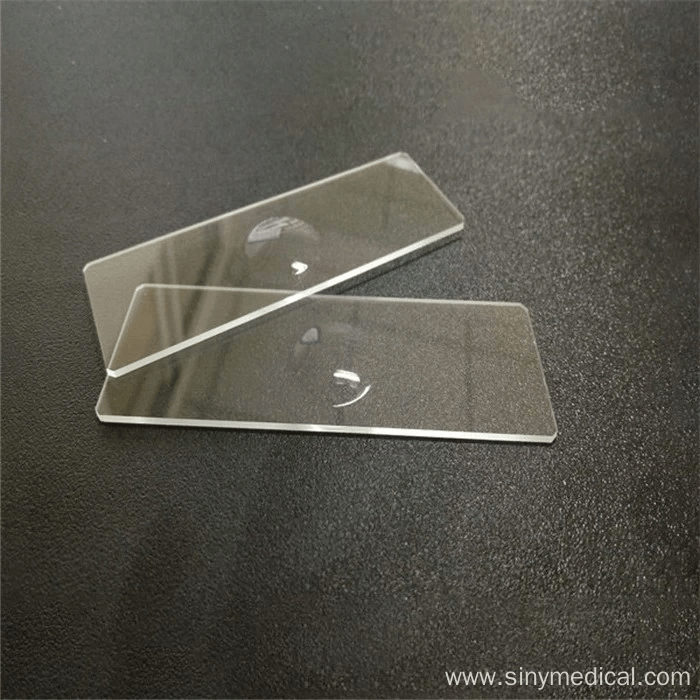
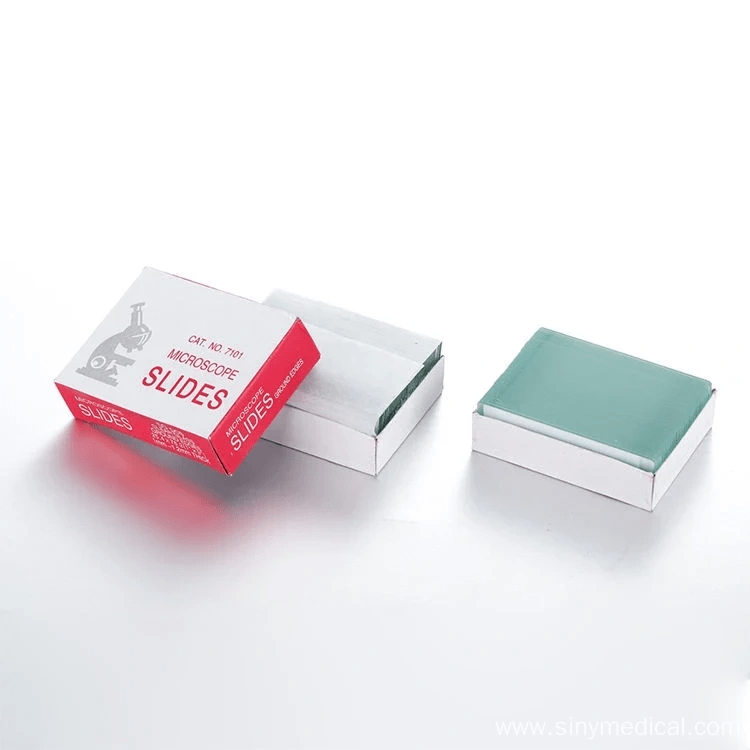
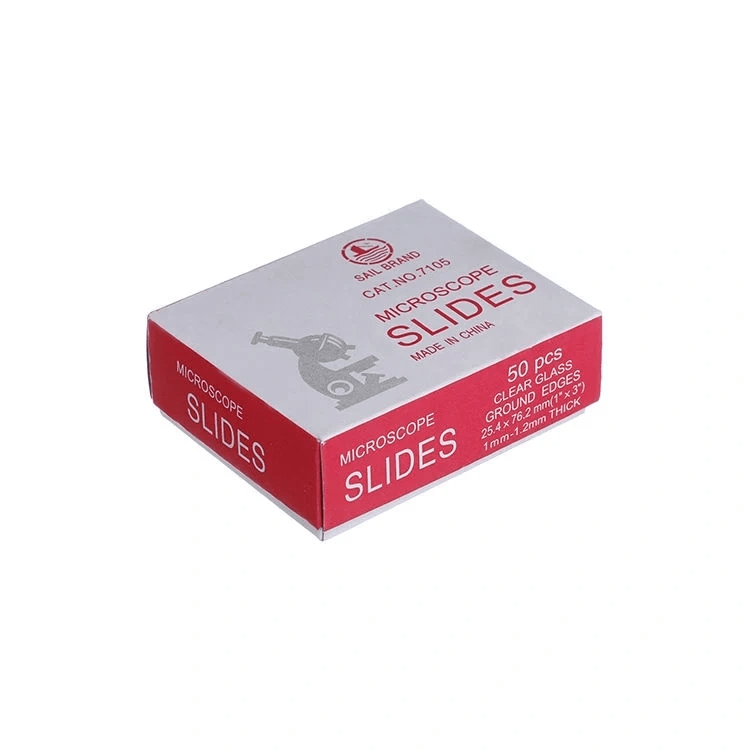
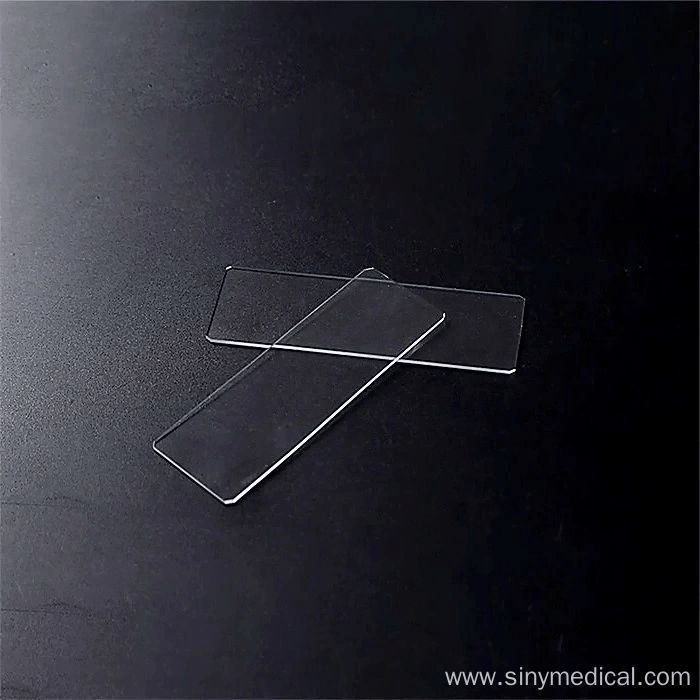
Siny Medical supplies 7102 Microscope Glass Slides for specimen preparation and microscopic examination. These glass slides provide a flat surface for mounting biological samples, tissue sections, cell preparations, and other laboratory specimens. They support routine microscopy in research, educational, and laboratory environments.
A microscope slide plays an important role in sample observation. Its surface condition, dimensions, and glass quality can influence specimen preparation and the clarity of microscopic images. Therefore, selecting a suitable slide is an important part of laboratory work.
Our 7102 microscope slides are designed for compatible microscopy applications. They provide a glass substrate for preparing and examining specimens using appropriate laboratory techniques.
A microscope glass slide provides a stable surface for holding specimens during examination. Although its construction is simple, several physical characteristics influence how it performs.
The 7102 designation identifies the slide model. However, exact dimensions, thickness, and edge treatment should be confirmed from the product specifications.
The glass surface supports specimens during preparation and observation.
Depending on the laboratory method, users may place a sample directly on the slide or apply a suitable mounting medium. A coverslip can then protect the preparation and help maintain the specimen’s position.
A clean surface is important because dust, fingerprints, and other contaminants may interfere with observation.
For this reason, users should inspect the slide before preparing a specimen.
Slide dimensions affect compatibility with microscope stages, slide holders, and storage equipment.
Thickness may also influence the positioning of a specimen within the optical system. This becomes important when using objectives with limited working distances.
However, the 7102 model designation does not independently confirm a particular thickness or size.
Laboratories should verify the actual dimensions when their equipment requires a specific slide format.
Microscope slides may have cut, ground, or polished edges.
Edge treatment can influence handling and the risk of damage during use. Nevertheless, glass remains a fragile material and requires careful handling.
The exact edge configuration of a 7102 slide should be confirmed from the product information.
Users should avoid handling slides with visible chips or cracks.
A glass slide provides the physical support needed for microscopic examination.
However, specimen stability also depends on the preparation method. Wet mounts, fixed samples, and stained sections may require different techniques.
The slide supports these procedures, but it does not replace suitable fixation, staining, or mounting methods.
Glass slides are widely used in laboratories that prepare and examine microscopic specimens. Their suitability depends on the sample type and preparation method.
Biological laboratories use microscope slides to examine cells, tissues, and other small structures.
A specimen may be placed on the slide and prepared with a suitable mounting medium or coverslip.
Proper preparation helps maintain the sample’s position and supports clear observation.
The microscope, illumination, and specimen preparation method also influence image quality.
Histology involves preparing thin tissue sections for microscopic examination.
Glass slides provide a surface for mounting these sections before staining or observation.
However, some tissue-processing methods require adhesion-coated slides to help sections remain attached.
Standard glass slides should not automatically be treated as equivalent to specialized adhesion slides.
The selected slide must meet the requirements of the histology procedure.
Cytology laboratories examine cells collected from different specimen types.
Glass slides may be used to prepare smears or other compatible cell preparations.
The quality of the preparation depends on sample collection, spreading, fixation, and staining.
A suitable glass surface supports these steps and allows the specimen to be examined under a microscope.
Microscope glass slides are common in biology classes and laboratory demonstrations.
Students may use them to prepare wet mounts and observe plant cells, microorganisms, or other specimens.
Their straightforward construction makes them useful for learning basic microscopy techniques.
However, careful handling is essential because broken glass can cause injury.
Research laboratories use glass slides for a wide range of microscopy-based procedures.
These include specimen comparison, staining experiments, and examination of prepared samples.
Some advanced methods require special coatings or optical properties. Therefore, the slide must match the intended technique.
Different microscope slides serve different laboratory requirements. Understanding their construction helps explain when a standard glass slide is suitable.
Standard slides provide a flat glass surface for general specimen mounting.
They are commonly used in routine microscopy, teaching, and research.
However, some laboratory procedures require additional surface treatment or specialized construction.
Frosted-end slides include a designated labeling area.
This feature helps laboratories identify and organize prepared specimens.
The presence of a frosted section must be confirmed for the specific product. It should not be assumed from the model number alone.
Adhesion-coated slides have a treated surface designed to improve specimen attachment in suitable procedures.
They may be useful when tissue sections undergo repeated washing or staining.
However, coating performance varies between products and applications.
Concavity slides contain a recessed area for holding certain liquid specimens.
They are useful for selected wet-mount preparations.
Unlike standard flat slides, their structure provides additional space for the sample.
| Slide Type | Main Feature | Typical Application |
|---|---|---|
| Standard Glass Slide | Flat glass surface | Routine microscopy |
| Frosted-End Slide | Labeling area | Specimen identification |
| Adhesion-Coated Slide | Treated surface | Selected tissue preparations |
| Concavity Slide | Recessed sample area | Certain wet mounts |
The actual construction of the 7102 slide should be verified before assigning it to a specialized category.
Several characteristics influence the performance of microscope glass slides. These include surface quality, dimensional consistency, and compatibility with laboratory methods.
Glass clarity affects how light passes through the slide during transmitted-light microscopy.
Visible defects or contamination may interfere with specimen observation.
However, image quality also depends on the microscope, illumination, coverslip, and sample preparation.
A clear-looking slide does not establish a particular optical transmission value.
Dust, fingerprints, and other contaminants may affect specimen preparation.
They can also introduce unwanted visual artifacts during examination.
Therefore, slides should be handled by their edges whenever practical.
If a laboratory method requires a specific cleanliness level, the selected product must meet that requirement.
Slide dimensions affect compatibility with microscope stages and laboratory equipment.
Thickness and flatness may also influence specimen positioning.
For this reason, laboratories should confirm the required dimensions before using slides with specialized instruments.
Microscope slides may come into contact with stains, fixatives, and mounting media.
Although glass is suitable for many laboratory applications, chemical compatibility depends on the reagent and exposure conditions.
Some chemicals may affect glass surfaces or specialized coatings.
The selected slide should be suitable for the intended preparation method.
The final quality of a microscopic preparation depends on more than the glass slide.
Sample thickness, fixation, staining, and coverslip placement all influence observation.
A suitable slide provides support, while correct preparation helps preserve the specimen and improve examination.
Proper handling helps protect the glass surface and maintain specimen quality.
Before use, inspect the slide for cracks, chips, or visible contamination. Do not use damaged slides.
Handle the slide by its edges to reduce fingerprints on the specimen-contact surface.
Prepare the specimen according to the laboratory method. For a simple wet mount, place a suitable amount of sample on the slide and carefully position a coverslip.
Other procedures may require fixation, staining, or specialized mounting media.
After preparation, place the slide on the microscope stage and secure it according to the instrument instructions.
Begin observation using suitable illumination and magnification. Adjust the focus carefully to avoid contact between the objective and specimen preparation.
After use, follow the laboratory’s cleaning, storage, or disposal procedures.
Used slides may contain biological material or chemical residues. Therefore, disposal must reflect the hazards associated with the specimen.
Store unused glass slides in protective packaging.
Keep them in a clean, dry environment away from dust and physical impact.
Avoid placing heavy objects on the slides.
Prepared slides may require different storage conditions depending on the specimen, stain, and mounting medium.
Follow the relevant laboratory procedure for long-term storage.
They provide a glass surface for mounting specimens during microscopic examination. Common applications include biological microscopy, educational laboratories, and sample preparation.
This product is identified as a glass microscope slide. The exact glass composition should be confirmed from the product specifications.
Exact dimensions and thickness should be verified from the product specifications rather than inferred from the model number.
They may be suitable for compatible histology preparations. However, some procedures require adhesion-coated slides.
Yes. Compatible coverslips are commonly used with glass slides during specimen preparation.
The 7102 model designation alone does not confirm a frosted labeling area. This feature must be verified separately.
Not necessarily. Sterility is a separate product characteristic that requires confirmation.
Keep unused slides in protective packaging in a clean, dry location. Protect them from dust, impact, and surface damage.
Siny Medical supplies 7102 microscope glass slides for laboratory specimen preparation and microscopic examination. Our laboratory consumables support biological research, educational microscopy, and compatible routine observation procedures. Explore our microscope slide products or contact Siny Medical to discuss available specifications, product configurations, and laboratory supply requirements.
Copyright © 2026 | Ningbo Siny Medical Technology Co., Ltd