| Specification | Details |
|---|---|
| Product Name | Foley Catheter Disposable Sterile Latex Foley Balloon Catheter |
| Product Type | Indwelling Foley Balloon Catheter |
| Material | Latex |
| Supplied Condition | Sterile |
| Intended Use | Single Use |
| Retention Mechanism | Inflatable Balloon |
| Primary Function | Urinary Drainage |
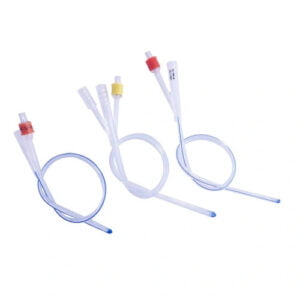
The Sterile Latex Foley Balloon Catheter is a disposable urinary catheter designed for continuous bladder drainage. It features a flexible latex body and an inflatable retention balloon that helps keep the catheter in position. The device is supplied sterile and intended for single use.
A Foley balloon catheter allows urine to flow from the bladder into a compatible collection bag. Therefore, healthcare professionals may use it when patients need ongoing urinary drainage for a clinically appropriate period.
The flexible latex construction supports catheter placement. Meanwhile, the retention balloon helps maintain its position after correct insertion. However, clinicians must select the appropriate catheter size and balloon specifications for each patient.
Siny Medical supplies disposable urinary catheters for hospitals, clinics, and medical distributors. These products support professional urinary care when indwelling catheterization is necessary.
The catheter is supplied sterile for use in appropriate healthcare settings.
Before opening the package, healthcare professionals should check its integrity and expiration date. They should not use the catheter if the sterile barrier is damaged or compromised.
In addition, clinicians must follow aseptic insertion procedures. A sterile device helps support infection-prevention practices, but it cannot eliminate the risk of catheter-associated urinary tract infection.
This Foley catheter is intended for one patient and one use. Healthcare facilities should not reuse or reprocess it.
However, single-use labeling does not mean the catheter must be removed after one day. The appropriate indwelling duration depends on the product instructions and the patient’s clinical condition.
After removal, healthcare staff should dispose of the catheter according to applicable medical waste procedures.
The catheter uses a latex-based body that provides flexibility during insertion.
This material allows the catheter to follow the natural curvature of the urethra. Nevertheless, healthcare professionals must use an appropriate insertion technique and select the correct size.
Because latex may cause allergic reactions, clinicians should avoid this catheter in patients with known latex allergy.
A balloon near the catheter tip helps maintain its position inside the bladder.
After confirming correct placement, a healthcare professional inflates the balloon according to the selected model’s instructions.
The required inflation volume and medium may vary between products. Therefore, clinicians should check the specifications before use.
Incorrect balloon inflation can cause discomfort, tissue injury, or catheter damage.
The catheter supports urine drainage into a compatible collection system.
A secure connection helps maintain continuous drainage. Healthcare professionals should also keep the tubing free from kinks and compression.
Furthermore, they should avoid unnecessary disconnections to help reduce contamination risks.
Disposable Foley balloon catheters support urinary drainage in several clinical situations.
Urinary retention occurs when a patient cannot empty the bladder adequately.
In selected cases, healthcare professionals use an indwelling catheter to drain urine while they assess and manage the underlying condition.
However, catheterization should follow clinical evaluation rather than serve as a routine response to every urinary complaint.
Some surgical procedures require temporary bladder drainage.
For example, clinicians may use a Foley catheter during selected operations or postoperative recovery. This allows them to manage urine drainage and monitor output when necessary.
The decision depends on the procedure, patient condition, and expected catheterization duration.
Urine output provides useful information during the care of certain critically ill patients.
An indwelling catheter allows healthcare professionals to collect and measure urine over time.
Nevertheless, clinicians should avoid catheterization when less invasive monitoring methods can meet the patient’s needs.
Some patients require continued urinary drainage because of specific medical conditions.
A Foley catheter may be appropriate when other bladder-management methods are unsuitable.
During extended use, healthcare professionals should monitor the patient and regularly reassess the need for catheterization.
Safe catheter use depends on product selection, correct handling, and appropriate clinical procedures.
Healthcare professionals should inspect the sterile barrier before use.
They should also verify the labeled expiration date and confirm that the package remains intact.
Importantly, sterile supply does not identify the sterilization method. Buyers should consult the product documentation when they need this information.
The retention balloon helps secure the catheter inside the bladder.
However, clinicians must confirm correct placement before inflation. They should then use the inflation volume and medium specified for the selected model.
Incorrect inflation may cause urethral injury or damage the device.
Natural rubber latex may trigger allergic reactions in susceptible patients.
Therefore, healthcare professionals should review the patient’s allergy history before selecting a latex catheter.
Patients with known latex allergy require a suitable latex-free alternative.
A closed urinary drainage system helps reduce unnecessary exposure to contamination.
Healthcare staff should maintain secure connections and avoid disconnecting the system without a clinical reason.
In addition, they should keep the collection bag below bladder level and off the floor. The drainage tubing should remain free from kinks.
Indwelling urinary catheters can increase the risk of catheter-associated urinary tract infection.
For this reason, healthcare professionals should review the indication regularly and remove the catheter when it is no longer necessary.
Hospitals and medical distributors should consider clinical needs, product compatibility, and purchasing requirements before ordering.
Foley catheters are available with different channel configurations.
For example, a two-way catheter typically supports urine drainage and balloon inflation. A three-way model adds a dedicated irrigation channel.
Therefore, buyers should confirm the selected product’s configuration rather than assume its channel count from the general product name.
Healthcare professionals measure catheter diameter in French (Fr) units.
The correct size depends on patient anatomy, drainage requirements, and clinical condition.
In general, clinicians should choose a size that provides adequate drainage without unnecessary urethral trauma.
Balloon capacity varies between catheter models.
Before use, healthcare professionals should confirm the recommended inflation volume and medium.
Catheter diameter alone does not determine balloon capacity.
Buyers should review the product’s sterile packaging, labeling, and instructions for use.
They should also verify the documented sterilization method and shelf life when these details are necessary for purchasing.
This catheter contains latex and is not suitable for patients with known latex allergy.
Therefore, healthcare facilities should consider whether they also need latex-free urinary catheter options.
The catheter should connect securely to the intended urine collection system.
Before ordering, buyers should verify the selected model’s dimensions, balloon specifications, drainage connection, and packaging details.
It provides continuous urinary drainage when indwelling catheterization is clinically necessary. The retention balloon helps maintain the catheter’s position inside the bladder.
The balloon helps keep the catheter in place after correct insertion. Healthcare professionals inflate it according to the selected product’s instructions.
No. Single-use means the device is intended for one patient and one use. The appropriate indwelling duration depends on clinical needs and product instructions.
No. Sterile describes the supplied condition. The actual sterilization method must be verified from the product labeling or technical documentation.
No. Patients with known latex allergy should avoid latex-containing catheters and use an appropriate latex-free alternative.
No. Foley balloon catheters may have different channel configurations. Buyers should verify the selected model’s design.
They consider patient anatomy, drainage requirements, and the intended procedure. The French size and balloon specifications must match the selected product’s instructions.
Hospitals should verify material, size, balloon capacity, channel configuration, sterile packaging, labeling, and compatibility with urine collection systems.
Siny Medical supplies urinary catheters and medical consumables for hospitals, healthcare facilities, and medical distributors. Our Sterile Latex Foley Balloon Catheter supports indwelling urinary drainage in appropriate clinical settings. Contact Siny Medical to discuss product specifications, purchasing requirements, and quotation details.
Copyright © 2026 | Ningbo Siny Medical Technology Co., Ltd